Products reviews

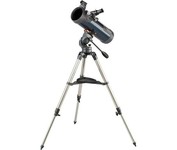
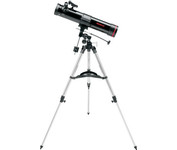
Celestron AstroMaster 114 AZ (50 x 114mm) Telescope

$120.00 to $250.00


Designed for the novice user, the Celestron® AstroMaster™ 114 AZ telescope features a alt-azimuth mount with a convenient pan handle with built-in clutch for easy targeting and smooth motion perfect for watching whales, spotting birds, viewing nature or checking out your favorite star or planet. The compact, portable design with ample optical performance will excite any newcomer to the world of amateur astronomy.Minimize

Manufacturer:Celestron Product MPNKey FeaturesMiscellaneous
MPNCITS31043
Optical Design   Refractor
Optical Diameter114 mm
Finderscope   Optical
Focal Length1000 mm
Max Useful Magnificationx 50
Mount Type   Altazimuth
MotorizedNo
UPC050234310437


Tags:

celestron, astromaster, 114, az, 50, x, 114mm, telescope,

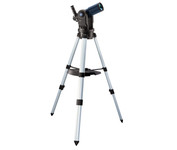
Meade ETX-80AT-TC (270 x 80mm) Telescope

$245.00 to $276.00


All of the major planets except Pluto are easily observable through Meade's brand-new 80mm (3.1) achromatic refractor telescope. You can study Saturn and its ring system; the primary cloud belts of Jupiter and its 4 major satellites; the Moonlike phases of Mercury and Venus; and much more.

Manufacturer:Meade Product MPNKey Features
MPN3052005
Optical Design   Refractor
Optical Diameter80 mm
Finderscope   Optical
Focal Length400 mm
Max Useful Magnificationx 270
Mount Type   Altazimuth
MotorizedYes


Tags:

meade, etx-80at-tc, 270, x, 80mm, telescope,

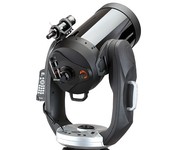
Celestron CPC 1100 GPS (XLT) (70 x 280mm) Telescope

$2,799.00


The largest aperture of the CPC GPS line, The CPC 1100 GPS Schmidt-Cassegrain telescope has the most light gathering power and has a limiting magnitude of nearly 15. The CPC 1100 GPS takes full advantage of its vast database of thousands of NGC and Abell galaxies as well as delivering a new level of detail to all your favorite deep sky objects. This CPC 1100 GPS features Celestron's premium StarBright XLT coatings.Minimize

Manufacturer:Celestron Product MPNKey Features
MPN11075-XLT
Optical Design   Catadioptrics
Optical Diameter280 mm
Finderscope   Optical
Focal Length2800 mm
Max Useful Magnificationx 70
MotorizedYes


Tags:

celestron, cpc, 1100, gps, xlt, 70, x, 280mm, telescope,


Celestron CPC 1100 GPS (XLT) (70 x 280mm) Telescope


The largest aperture of the CPC GPS line, The CPC 1100 GPS Schmidt-Cassegrain telescope has the most light gathering power and has a limiting magnitude of nearly 15. The CPC 1100 GPS takes full advantage of its vast database of thousands of NGC and Abell galaxies as well as delivering a new level of detail to all your favorite deep sky objects. This CPC 1100 GPS features Celestron's premium StarBright XLT coatings.Minimize


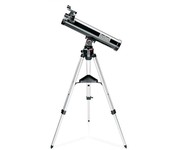
Bushnell NorthStar 78-8846 (675 x 114mm) Telescope


Real Voice Output version of premier Northstar 675x4.5". With the tough of a button this talking telescope describes the wonders of the night sky in a real human voice - an interactive and educational way to explore the universe. "Goto" Computerized tracking technology. Red Dot LED finderscope. Remote hand-held control module. Camera adaptable. Quick release tripod. Kinematic mount. Accessory tray. 20,000 Object Onboard Starfinding Computer. 1.25" Format Eyepieces. Barlow Lens. A great starting telescope!Minimize


Celestron NexStar 60 SLT (120 x 60mm) Telescope


Our most affordable NexStar telescope turns starry nights into space odysseys. The 60mm refractors come with a fully computerized hand control with a database of over 4,000 celestial objects. With its pre-assembled, adjustable steel tripod, the NexStar 60 SLT can be up and ready to use in a matter of minutes


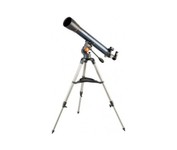
Celestron AstroMaster 70EQ (90 x 70mm) Telescope


If you're looking for a dual-purpose telescope appropriate for both terrestrial and celestial viewing, then the AstroMaster Series is for you. Each AstroMaster model is capable of giving correct views of land and sky. The AstroMaster Series produce bright, clear images of the Moon and planets. It is easy to see the moons of Jupiter and the rings of Saturn with every one of these fine instruments. For views of the brighter deep space objects like galaxies and nebulae, we recommend the larger aperture and light gathering ability of the Newtonian reflectors.Minimize