Products reviews
Bushnell NorthStar 78-8890 (300 x 90mm) Telescope
$315.00 to $365.00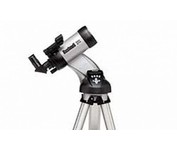
The NorthStar® telescopes offer amateur astronomers state-of-the-art computer-driven location and tracking capability with simple, push-button control. With a built-in data base of 20,000 celestial objects, you simply call up your target on the hand-held control module, enter a simple "Go To" command and the NorthStar computer does the rest. Once locked on, tracking the object for prolonged viewing is automatic. The innovative RVO (Real Voice Output) feature provides a fun, interactive way to explore the night sky. The remote, hand-held control module features red, backlit push buttons and a red, illuminated LCD read-out for easy viewing without impairing your night vision. Minimize
| MPN | 788890 |
| Optical Design | Catadioptrics | Optical Diameter | 90 mm | Finderscope | Red-Dot | Focal Length | 1200 mm | Max Useful Magnification | x 300 | Mount Type | Altazimuth | Motorized | Yes |
| UPC | 002975778892 |
Tags:
bushnell, northstar, 78-8890, 300, x, 90mm, telescope,Celestron AstroMaster 114EQ (100 x 114mm) Telescope
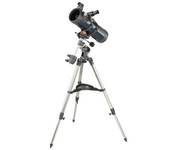
The AstroMaster Series produce bright, clear images of the Moon and planets. It is easy to see the moons of Jupiter and the rings of Saturn with every one of these fine instruments. For views of the brighter deep space objects like galaxies and nebulae, we recommend the larger aperture and light gathering ability of the Newtonian reflectors.Minimize
Celestron AstroMaster 114 AZ (50 x 114mm) Telescope
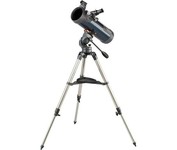
Designed for the novice user, the Celestron® AstroMaster™ 114 AZ telescope features a alt-azimuth mount with a convenient pan handle with built-in clutch for easy targeting and smooth motion perfect for watching whales, spotting birds, viewing nature or checking out your favorite star or planet. The compact, portable design with ample optical performance will excite any newcomer to the world of amateur astronomy.Minimize
Meade LXD75 SN-8 AT (08047502) (500 x 203mm) Telescope
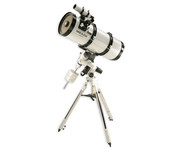
Meade LXD75 SN8-AT UHTC is an 8 inch Schmidt-Newtonian reflector type telescope with 812mm focal length and fast f/4 aperture and Meade Ultra High Transmission Coating, for 20% more image brightness over its non-UHTC sister model.
Celestron CPC 1100 GPS (XLT) (70 x 280mm) Telescope
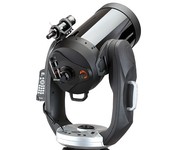
The largest aperture of the CPC GPS line, The CPC 1100 GPS Schmidt-Cassegrain telescope has the most light gathering power and has a limiting magnitude of nearly 15. The CPC 1100 GPS takes full advantage of its vast database of thousands of NGC and Abell galaxies as well as delivering a new level of detail to all your favorite deep sky objects. This CPC 1100 GPS features Celestron's premium StarBright XLT coatings.Minimize
