Products reviews
Tasco 49060700 (60 x 700mm) Telescope
$54.00 to $90.00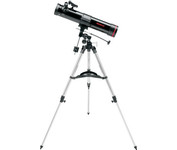
For those who want to experience astronomy but not get too committed, the Tasco Spacestation 60AZ may be the perfect scope for the first.
| MPN | 49060700 |
| Optical Design | Refractor | Optical Diameter | 700 mm | Finderscope | Red-Dot | Focal Length | 700 mm | Max Useful Magnification | x 60 | Mount Type | Altazimuth | Motorized | No |
| UPC | 46162092989 |
Tags:
tasco, 49060700, 60, x, 700mm, telescope,Meade NG-60 (20200) (233 x 60mm) Telescope
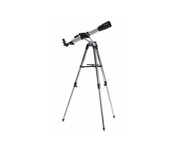
A perfect beginning telescope designed specifically for land use, and an occasional peak at the sky. The tripod mount that holds the telescope is designed to move only in straight lines, called Altazimuth.Objects in the sky move in semi-circles, never in straight lines.Use lower power eyepieces to track the Moon, and keep it in the eyepiece.Minimize
Meade ETX-80AT-TC (270 x 80mm) Telescope
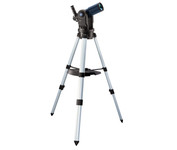
All of the major planets except Pluto are easily observable through Meade's brand-new 80mm (3.1) achromatic refractor telescope. You can study Saturn and its ring system; the primary cloud belts of Jupiter and its 4 major satellites; the Moonlike phases of Mercury and Venus; and much more.
Celestron AstroMaster 90EQ (100 x 90mm) Telescope
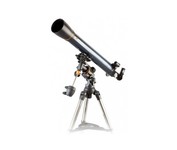
The AstroMaster produce bright, clear images of the Moon and planets. It is easy to see the moons of Jupiter and the rings of Saturn with every one of these fine instruments.
Celestron PowerSeeker 70 EQ 21037 (35 x 70mm) Telescope
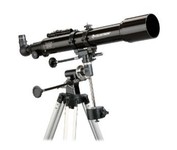
Celestron’s PowerSeekers include a full range of eyepieces plus a 3x Barlow lens that provides an increase in viewing power hundreds of times greater than that of the unaided eye!
