Products reviews
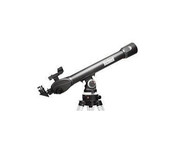
Bushnell Voyager 78-9970 (100 x 70mm) Telescope$107.00 to $137.00
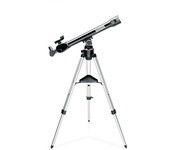
Tags:bushnell, voyager, 78-9970, 100, x, 70mm, telescope, | Bushnell SkyTour 78-9960 (700 x 60mm) Telescope$79.00 to $120.00
Tags:bushnell, skytour, 78-9960, 700, x, 60mm, telescope, | Galileo FS-80 Telescope$65.00 to $80.00
Tags:galileo, fs-80, telescope, |
Celestron Omni XLT 127 (300 x 127mm) Telescope
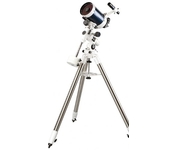
Omni XLT series features the stable platform of the CG-4 mount and high quality optics. Using aspheric shaping technology in conjunction with hand-figuring the optics the Omni XLT presents an image with virtually no spherical abberation. We also added our famous StarBright XLT coating system to further enhance light transmission.Minimize
Galileo FS-80 Telescope
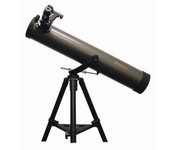
The Galileo FS-80 reflector telescope is a great beginner's reflecting telescope. The large 80mm primary mirror cell collects 33% more light than a 60mm refracting telescope. 1.25 focus housing permits the use of larger higher quality 1.25 eyepieces. Yoke mount makes the telescope easy to manage through altitude / azimuth (Up & Down, Left & Right) movement, and altitude slow motion control rod for precision adjustmentsMinimize
Meade ETX-80AT-TC (270 x 80mm) Telescope
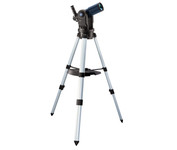
All of the major planets except Pluto are easily observable through Meade's brand-new 80mm (3.1) achromatic refractor telescope. You can study Saturn and its ring system; the primary cloud belts of Jupiter and its 4 major satellites; the Moonlike phases of Mercury and Venus; and much more.
Meade NG-70 (140 x 70mm) Telescope
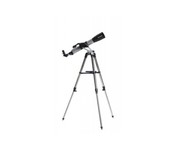
Recently upgraded from 60mm to 70mm aperature, Meade's NG70 telescope combines improved light-gathering ability with light-loss-reducing special optical coatings to produce noticeably sharper images of both celestial and terrestrial objects, making for a much better viewing experience. All the major planets except Pluto are clearly visible. The Moon stands out in near three-dimensional detail, revealing craters, mountain ranges, and fault lines. Dozens of external galaxies are visible; and, in our own Milky Way, this telescope displays hundreds of nebulae, star clusters, double and multiple stars, and variable stars.Minimize